



A book by Raghav Bhatia

Undressing
Human21st Century

Waking up to reality.

A field manual for looking at a human being — starting with yours — and seeing what is actually running the machine. Where your energy sits. What is holding it. Why you do the things you swore you would stop doing.

This book is a virus and a cure.
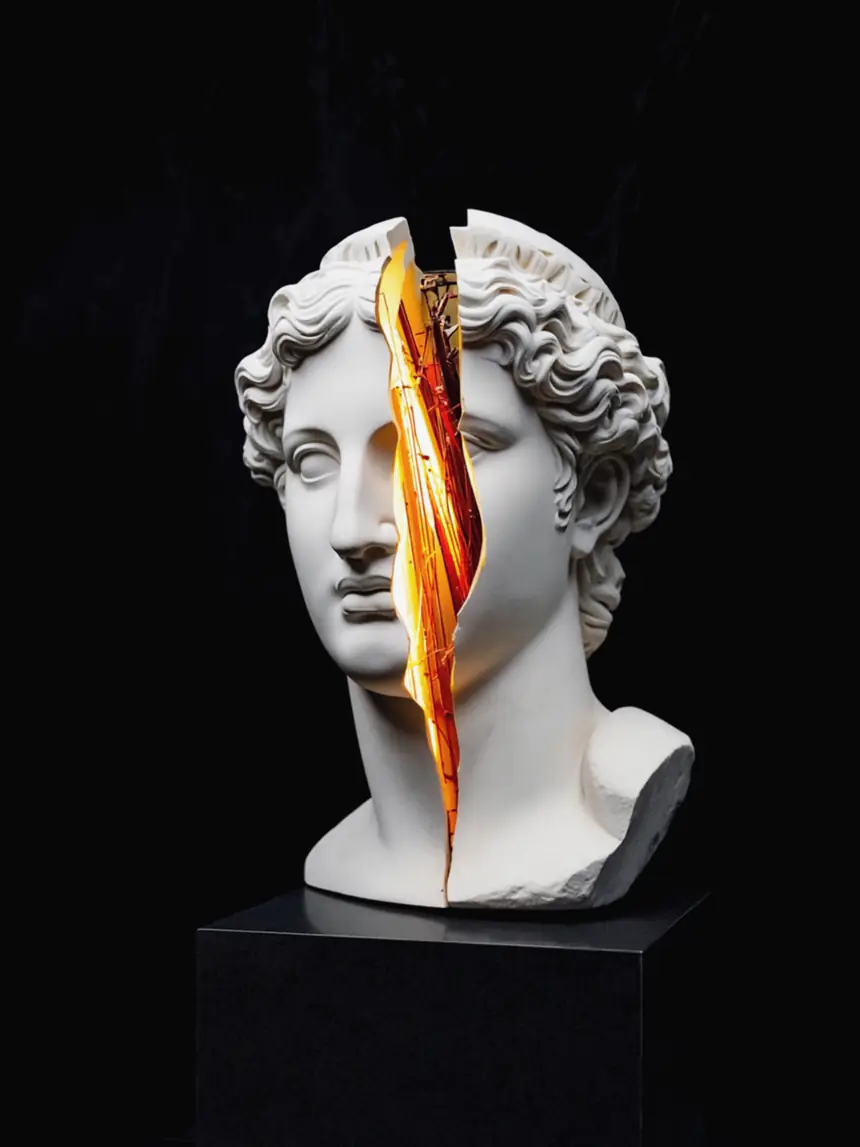
One root specimen: a wild ember-red tangle at one end resolving into clean pale fibre at the other

Ten chapters. Four parts. One warning, printed on the first page like it is printed on a cigarette packet.

Waking up to reality
UndressingHuman
21st Century
Raghav Bhatia

Cover — work in progress


Before you go further

Two doors. Both of them
are honest.

Before this book, you are inside a safe bubble of humanity. After this book: outside, in the unknown. There is no version of this where you read it and stay exactly the same, so choose deliberately.

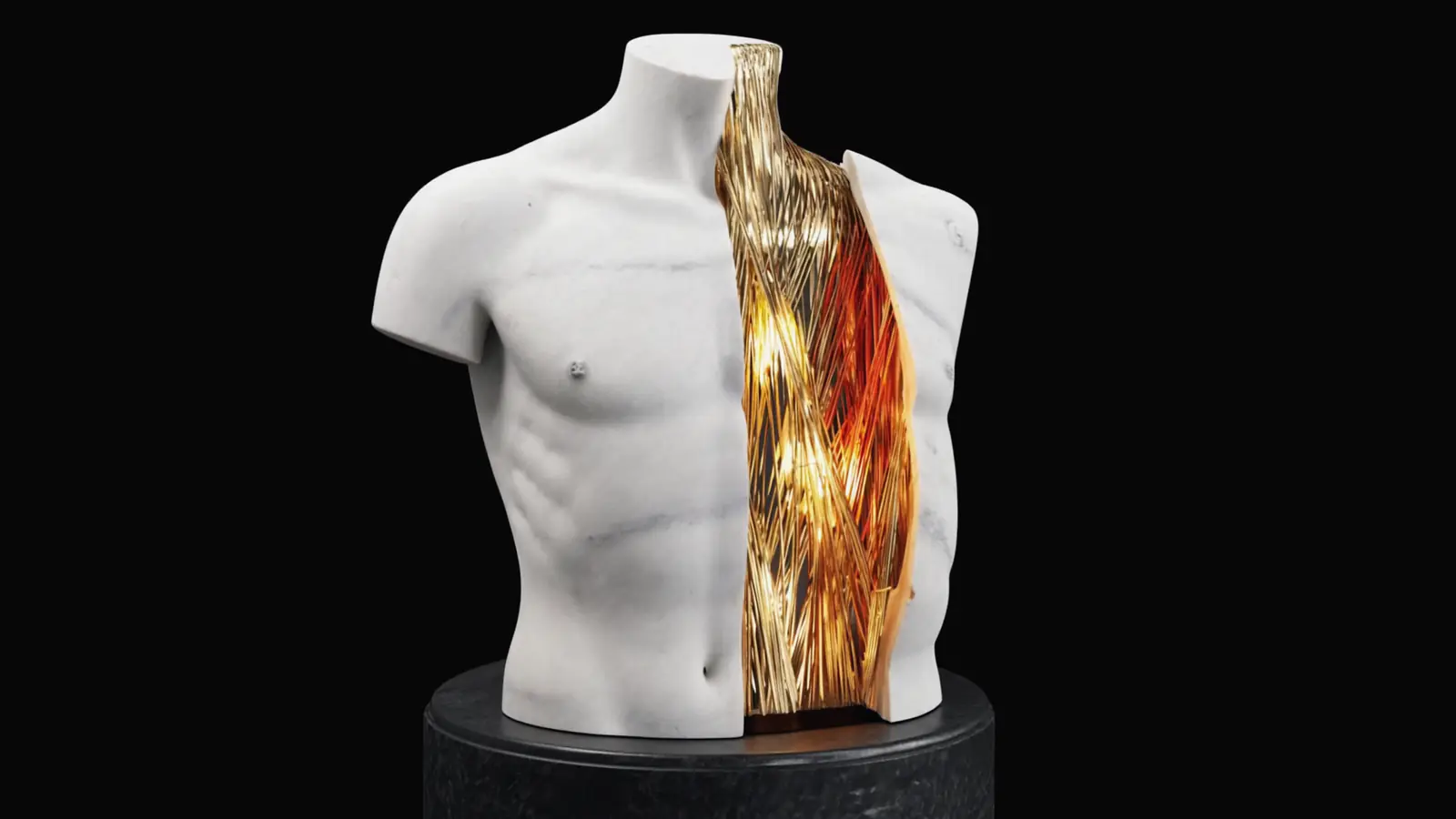
A marble torso opened along a seam, gold and ember light inside the hollow stone

The premise

Undress the human.
Then read the room.

Everything solid has a place. The Eiffel Tower is in Paris. The sun is in the sky. Thoughts are in the mind. So if energy is real, it has a place too — and the whole book begins by finding out where yours is sitting today, and what that single fact has quietly decided about your life.

Up is the mind: thoughts, logic, ideas, business, every system that promises you a better way to think. Down is raw and primal, and most of the world lives there without ever noticing, which is exactly why it gets called normal. Neither one is a sin. But not knowing which one you are in is the difference between driving and being driven.

What

What you actually do — not the version you narrate to friends.

How

The mechanics. Forces, pulls, pushes. Attraction and repulsion.

Why

The part nobody checks, because the answer is rarely flattering.


A single spotlit chair alone on a stage, the seats beyond it lost in darkness

Who this is for

You got everything
you asked for.
Why is the room
so quiet?

There is a particular silence that arrives after you win. The stadium empties. The deal closes. The number lands in the account and you look at it for a while. And the feeling you spent fifteen years working toward lasts about four minutes.

Nobody warns you about that, because from the outside it looks like ingratitude — and you know exactly how it would sound if you said it out loud, so you do not say it. You say you are tired. You say it has been a big year. You book something. You buy something. You start the next thing, mostly because the next thing is the only thing that has ever worked.

This book will not tell you to be grateful, or to find balance, or to wake an hour earlier. It asks a colder question, and it is the only one that has ever moved this: where is your energy actually sitting, and what has quietly been holding it there?

The one on the stage

Twenty thousand people singing your own words back at you, and a room forty minutes later that none of it followed you into. You have said thank you so many times tonight that the word stopped meaning anything somewhere around the third encore.

“I am at the top of the thing. So why does it feel like nothing is happening?”
The one who got out

Eleven years, and then a wire transfer on a Tuesday afternoon. Everyone you know sent the same message. You were supposed to feel free. Instead the alarm goes off and there is nothing behind it, and you have started to miss the version of you that was drowning.

“I built the escape. Nobody told me what to do once I was out.”

The one who won early

Best in the world at twenty-four, nothing above you, and thirty more years to spend. The thing that organised every day of your life since you were nine is finished — and it took the person you knew how to be along with it.

“I peaked. What is the rest of it for?”

The one with the whole life

The house, the person, the children, the number. Nothing is wrong, and that is the problem: no crisis to point at, no villain, nothing you could complain about without sounding obscene. Just a flatness that has been there so long you stopped registering it as unusual.

“I have no right to feel this. I feel it anyway.”

The book’s claim is that none of this is a character flaw and none of it is a diagnosis. It is a mechanical fact about where energy sits and what it gets attached to — and the reason the win did not fix it is that the win was never the thing holding you.

You already know how to get what you want. That is not in question here and this book has nothing to teach you about it. What it does is take the instrument you have spent a career pointing at markets, records, opponents and companies, and turn it around to face the one machine nobody has ever shown you the inside of.

Which is also why the two doors at the top of this page are real. Plenty of people at the top are genuinely fine, and this is a bad trade for them. Ignorance is bliss is not sarcasm on this site.

One honest note, the same one printed on page one: this is not a gentle read for a fragile month. It is a virus and a cure, in that order. If you are in real trouble right now, speak to a doctor before you speak to a book — a book is not care, and this one is honest enough to say so.

The contents

Four parts.
Ten chapters.

It moves from you, to the world, to you inside the world, to God — and then to me, which is the chapter I did not want to write.

A plaster cast of a hand, palm upward, holding one small sphere of ember light

Part I — You

Two soap bubbles resting against each other on black glass, iridescent in gold and ember

Part II — World

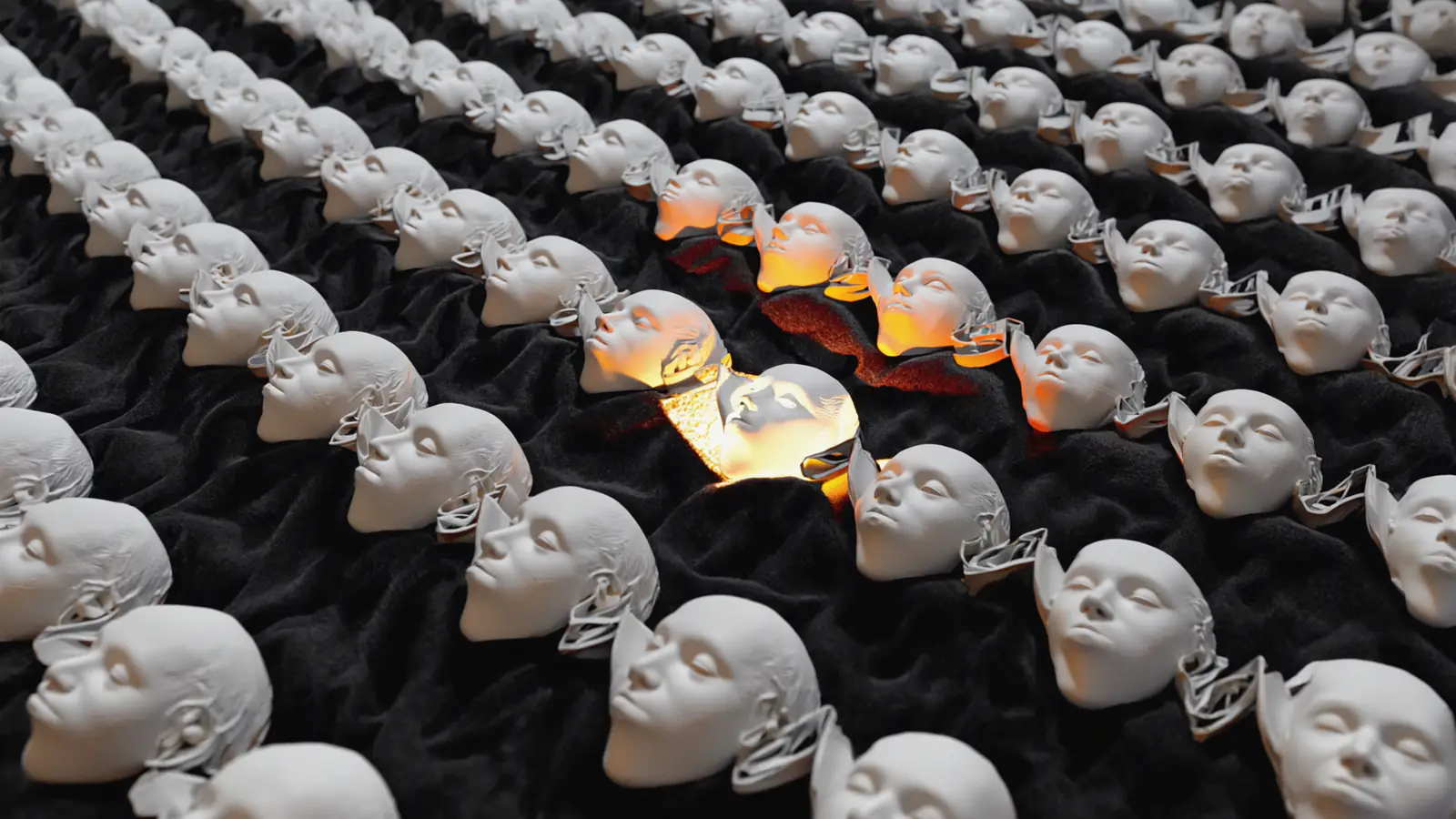
Rows of identical pale face casts on black velvet, one of them lit gold

Part III — You & the World

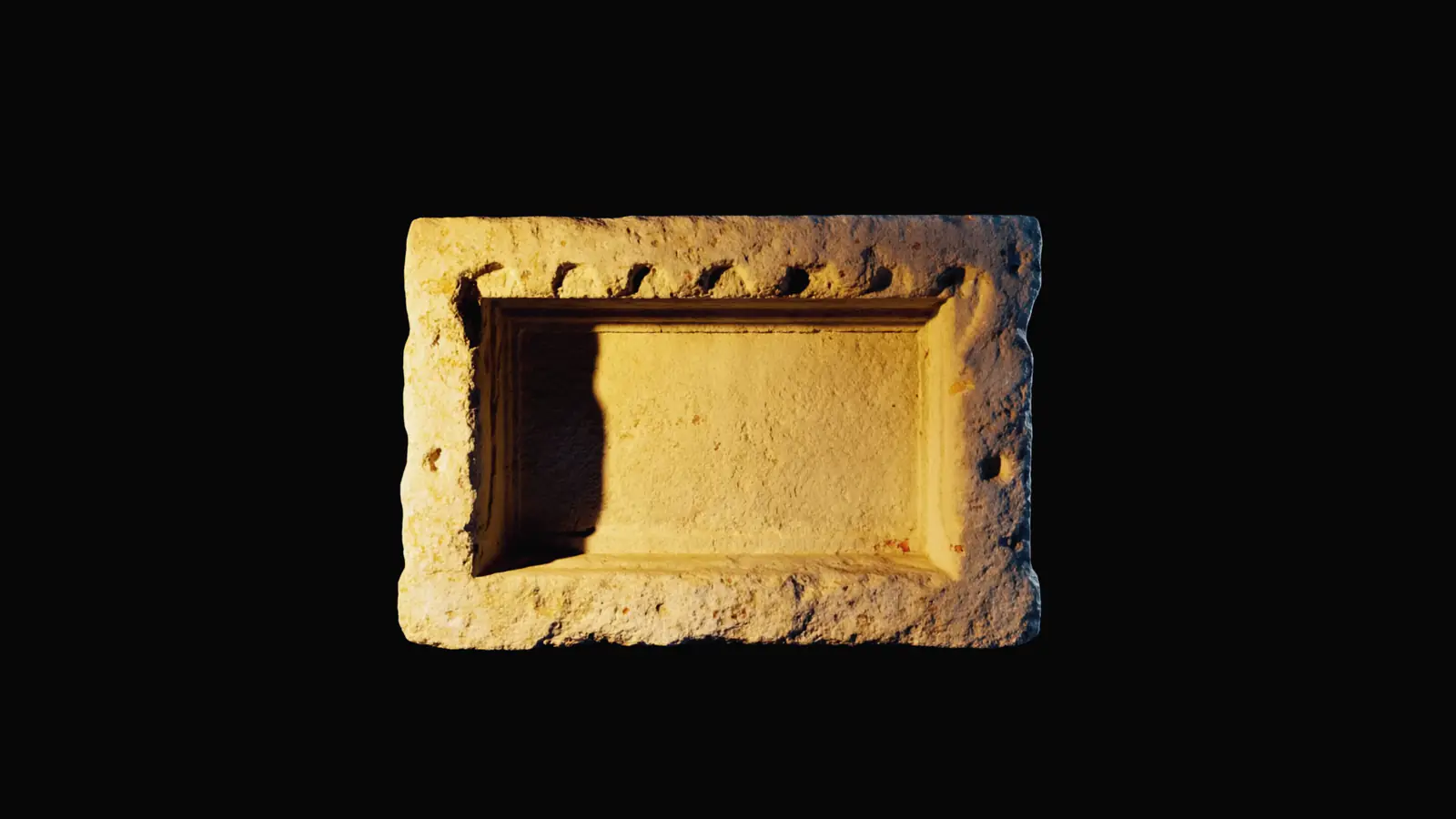
An empty carved stone niche in a black wall, one shaft of gold light falling into it

Part IV — God & Me

A dark reading room, one chair lit gold, a book open on the arm of it

The beta read

Thirteen readers were
built to take it apart.

Not a blurb round. Two full passes, thirteen readers, every paragraph of the manuscript — a hospital worker on the South Side of Chicago, a charge nurse outside Atlanta, a twenty-two-year-old at NYU, a Dutch drifter in northern Thailand, a sixty-five-year-old who reads Kant for pleasure, an acquiring editor reading for a reason to stop, a literary agent, a book critic, a teacher of forty years, and the machine itself. Each one with a life, a bookshelf, and a page where they put it down.

The instruction was friction first: no praise padding, no cultural-literacy notes, no protecting the author. They found plenty — thirteen thin spots, one chapter that costs more than it earns, and an ending that retracts the book. That list is longer than this page, and it is the reason the book is not out yet.

This is what the same readers said where it worked. Verbatim, including the parts that are still an argument.

The reader falls in love with the author between chapters two and three, gets hurt by him in four, forgives him in five and six, is saved by Frank in eight, and is completely undone by ten. The final line is the last thing they read and the first thing they quote.

All seven lenses the one-line summary of the reading experience

This book didn’t fix me. But it didn’t try to. It cracked something open. I can’t unsee that.

Sophie 22, student, New York

Sometimes he speaks from a place of truth that reaches across whatever distance separates his Goa beach from my South Side kitchen. When he does, it’s magic.

Marcia 38, hospital worker, Chicago

I’ve spent forty years reading people try to say this. Most use a thousand words. He used six.

Erich 42, four decades of contemplative practice — on “Life is not something to be solved. It is to be lived.”

“Life is not something to be solved. It is to be lived.” — I need that on my kitchen wall. This is the whole book in one image. This is what I came here for.

Marcia on the arrow story, chapter one

When he wrote “a fish does not know it’s in water” — I literally gasped. I’ve been living in water and didn’t know it for three months. This chapter made me feel seen in a way no other passage has.

Sophie on chapter five, The Bubble

You’ve touched something vulnerable here. At sixty-five, with tremors I’m hiding from my daughter, sometimes I can’t quite tell the difference between choosing stillness and being unable to move. You wrote that distinction. It matters.

Elaine 65, Miami — reads Kant, Nietzsche, Beauvoir for pleasure

This is anthology material. It should be excerpted, circulated, printed on its own page. It is the strongest single passage in the chapter — arguably in the whole book.

Iris book critic — on the arrow story

It avoids the twin traps of grief writing. It doesn’t dramatise and it doesn’t minimise. It states the fact of the memory as a distant star and lets the reader feel the distance without being told how to feel about it. The restraint is the art.

Iris on chapter ten — “deserves to be anthologised”

She’s read fifty books that open with a promise. This one opens with a warning. Her guard drops immediately, because a person warning you off is not a person selling to you.

Emma 27, New York — on the foreword, “the single smartest thing you do”

The core insights are real. The problem is delivery, not discovery. The thinking is sound.

Alex 52, literary agent and editor

The insight is mature. Strengthen the arguments. Expand the personal passages. Maintain the voice. Don’t polish it into submission.

Iris the critic’s closing note

The book is the process of noticing, then understanding, then creating. The arc is complete. The voice is authentic. The ambition is enormous. The execution is honest.

Hermes the machine — structural scan, contradiction map, voice consistency

Every lens said the same thing in a different voice: the truth is already there. It needs transmission, not transformation.

The consolidation seven readers, one verdict

Where it lands hardest

Seven readers, one continuous read, scored chapter by chapter. The bar is how hard it hits — not how good it is. The two short columns are the two rewrites the book is in right now, and they are on this page for the same reason the company publishes $0.

Foreword

Warned · intrigued · confused

01  Energy

Grounded · dense

02  Trap

Recognition · wonder

03  Heal

Relief · action · tears — peak

04  LGBTQ and You?

The crash — being rewritten

05  The Bubble

Wonder · fatigue

06  Marriage

Recognition · grief · wisdom — peak

07  Business

The low — being rewritten

08  Awake, Asleep

Joy — “tell the devil Frank says hi”

09  God

Confrontation · scepticism

10  I, Me, Myself

Grief · awe · humility — the heart

Ending

Confession · freedom

Protected

What none of them would let me touch.

Every reader flagged these independently, and every one of them said a smoothing pass would kill it. So they survive the edit intact, typos and all where the typo is the point.

01

The anti-promise foreword

A book that opens by telling you not to read it. Called the single smartest structural move in the manuscript, by the reader most likely to sell it.

02

The clouds and the sky

The close of chapter two. Best passage in the first half, unanimously. “A trap is when the clear sky above you slowly fills with clouds.”

03

Frank

The one named human being in the whole book. Every lens remembered him better than anything else. Complete as written — do not explain him further.

04

Sky time

“No one schedules sky time the way they schedule meetings.” Named by three separate readers as the most quotable line in the book.

05

Step Zero

Simple, actionable, unfashionable, correct. The chapter every human reader said they would tell a friend about.

06

The crudeness

Not the target — the register. “Tell your brain to go fuck itself” stays. So do the unhedged declaratives. That is the sound of the voice.


The author

Raghav
Bhatia

I did not set out to write a self-help book, and this is not one. There is no morning routine here, no framework, no seven habits. I write the way the thought arrives — which means you watch me think instead of reading a conclusion I reached somewhere off-page.

Buddha stayed silent for three days after enlightenment, deciding whether to keep the bliss or step back into the noise and try to explain it. We know which he picked. Maybe one day I will fall silent for good. Until then this book is what I see, feel, and go through on the way there.

I gave a warning on page one, the way it is printed on a cigarette packet. That was the best I could do.

— Raghav

Chapter three, made real

The book says nature is the
only thing that does not
drain you.

So I built a place where that is not a paragraph — it is the entire day. Off the grid. Sun on one end, moon on the other, the sea in between. Two people a year.

The list

Read it before
it is finished.

One email when the book lands — and, if you want it, everything that happens between now and then. The making is more interesting than the launch, and you are early enough to change it.

01

The pages, as they change

Revised passages sent as they are revised, with the reader note that forced the change printed underneath. You watch the book get made instead of meeting the finished object.

02

A seat in the next read

The next round of beta readers comes off this list — real people this time, not built ones. Your reaction goes in the ledger beside theirs, and the ledger is what the rewrite is made from.

03

The cuts

Everything removed and the argument for removing it, including the chapter six independent readers all said was costing more than it earned. The failures go out with the wins.

04

First copies, first

When it prints, this list is served before a shelf is. No countdown, no launch theatre, and no pre-order button taking your card today for an object that does not exist yet.

Free, from any country. No card, one click out, and the address is used for this and nothing else.

The same address also holds you a free, permanent place in the God Complex founding 100,000 — the weekly build log, the experiments, and a beta drive in 2028 before any are sold. Ignore that half if you like; it costs nothing either way. See what the queue gets you →